Never surfed
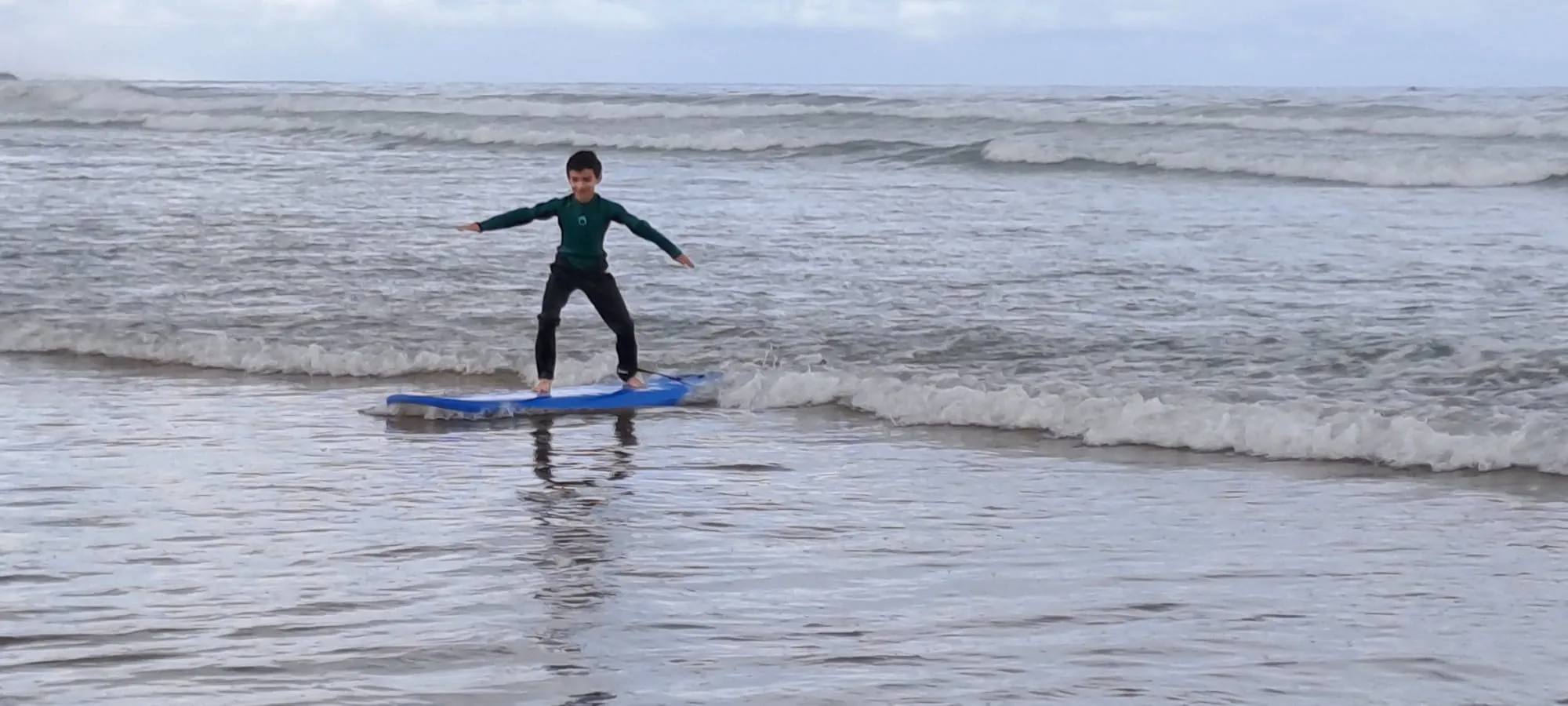
Agadir Beach — wide sand, soft falls, no reef under your feet.
Local break guide
Agadir has sand beaches, reef peaks, and famous points within a 30 km stretch of Atlantic coast. This page tells you which break suits your level, when it works, and what can go wrong — the stuff a map never shows. Want a coach on the break with you? Book a surf lesson in Agadir from €30, plan a coached week, or read about Simo, who picks the spot each morning.
We rotate through these breaks on our coaching weeks depending on swell, tide, and who is in the water.
Start here
“Beginners belong on sand. I would rather give you twenty small waves at Agadir Beach than one fight for a reef peak.”
Simo · Lead coach
Match this to a live forecast before you paddle out alone.
Conditions change every swell cycle. These are starting points — not guarantees.
Agadir Beach — wide sand, soft falls, no reef under your feet.
Anza on a high-tide morning, or Banana Point when swell stays small.
Devil's Rock or Anza reef — only when you can paddle out and read a peak without help.
Anchor Point on a clean W/NW swell. Long paddle, long rides, busy lineup.
Planning table
Cross-check with a live forecast. A clean 1 m day often beats a messy 2 m day for learning.
| Break | Good for | Swell | Tide | Simo's note |
|---|---|---|---|---|
| Anza | Progression and first green waves | W / NW | All tides; reef best low-to-mid | Our default coaching break — sand and reef options. |
| Agadir Beach | First stand-ups | Small to medium W / NW | Mid to high | Softest option in the area. Avoid on huge swell days. |
| Banana Point | Mellow right-hand practice | Light W / NW | Varies with sand | Good when sweep is low and swell stays modest. |
| Devil's Rock | Intermediate technique | Small to medium W / NW | All tides | Faster at low tide — check the rip near the rock. |
| Panoramas | Whitewater and basic turns | Small to medium W / NW | Check sandbanks daily | Fallback beach break when Anza is too heavy. |
| Anchor Point | Not for learners | W / NW | Mid to high on good days | Advanced only — fitness and etiquette required. |
Each card covers level, wave type, timing, and hazards. October through March is the most consistent window on this coast.
Where we spend most coaching weeks
Main coaching breaks
Five kilometres north of Agadir city centre. The break we use most for week-two progression — sand frames on one side, a manageable reef peak on the other.
Main coaching breaks
Central Agadir — long sandy stretch with gentle rollers. Where most first-timers take their opening sessions before moving to Anza.
Main coaching breaks
Thirty kilometres north — Morocco's most photographed right. For confident surfers only; we do not bring beginners here regardless of how good the photos look.
Also in the weekly rotation
Beginner-friendly zone
Near Aourir, north of Agadir. A useful step-up when conditions stay light and you want longer right-hand faces.
Intermediate corridor
Tamraght area. Punchy rights that reward a clean bottom turn. We bring intermediates here once pop-ups and line choice are solid.
Beginner-friendly zone
Taghazout direction, still within easy reach of Agadir. A reliable fallback when you want sand under your feet and space to repeat drills.
Taghazout has the famous point breaks but also the crowds. Agadir gives you softer sand and reef options, a major airport (AGA), and city services — plus a 20-minute drive north when the points turn on. Most of our guests stay in Agadir and day-trip to Taghazout on the best swell days.
Spot questions
Tap any question — same answers we send by email.
Yes. Agadir Beach has wide sand-bottom rollers at mid-to-high tide, and Anza adds reef and beach peaks 5 km north. Both work for coached sessions most days of the year.
Taghazout (30 km north) has famous point breaks but heavy crowds. Agadir gives you softer sand and reef setups, a major airport, city services, and a short drive north when swell hits the points.
The six we use most: Anza, Agadir Beach, Banana Point, Devil's Rock, Panoramas, and Anchor Point. Each needs a different tide and swell window — the guide on this page breaks them down by level.
Agadir faces the open Atlantic, so swell arrives in every season. Winter is the most powerful; summer is smaller but Agadir Beach still offers coachable whitewater on the right days.
Need help choosing?
Tell us your dates, level, and who is travelling. We reply with a forecast read and which breaks we would use that week.
Written quote first · Max 5 per week · Agadir base
Sources & methodology
Local break notes, lesson details, prices, group caps, operating dates, and guest totals are first-party information from Agadir Surf Club. Safety, destination, and travel facts are cross-checked against the official sources below.
Reviewed and materially updated . Conditions, transport, and entry rules can change; confirm live details before travelling or paddling out.